.svg)




Build scalable, secure apps that drive innovation and growth.
شكرًا لك!
TLDR Executive Summary
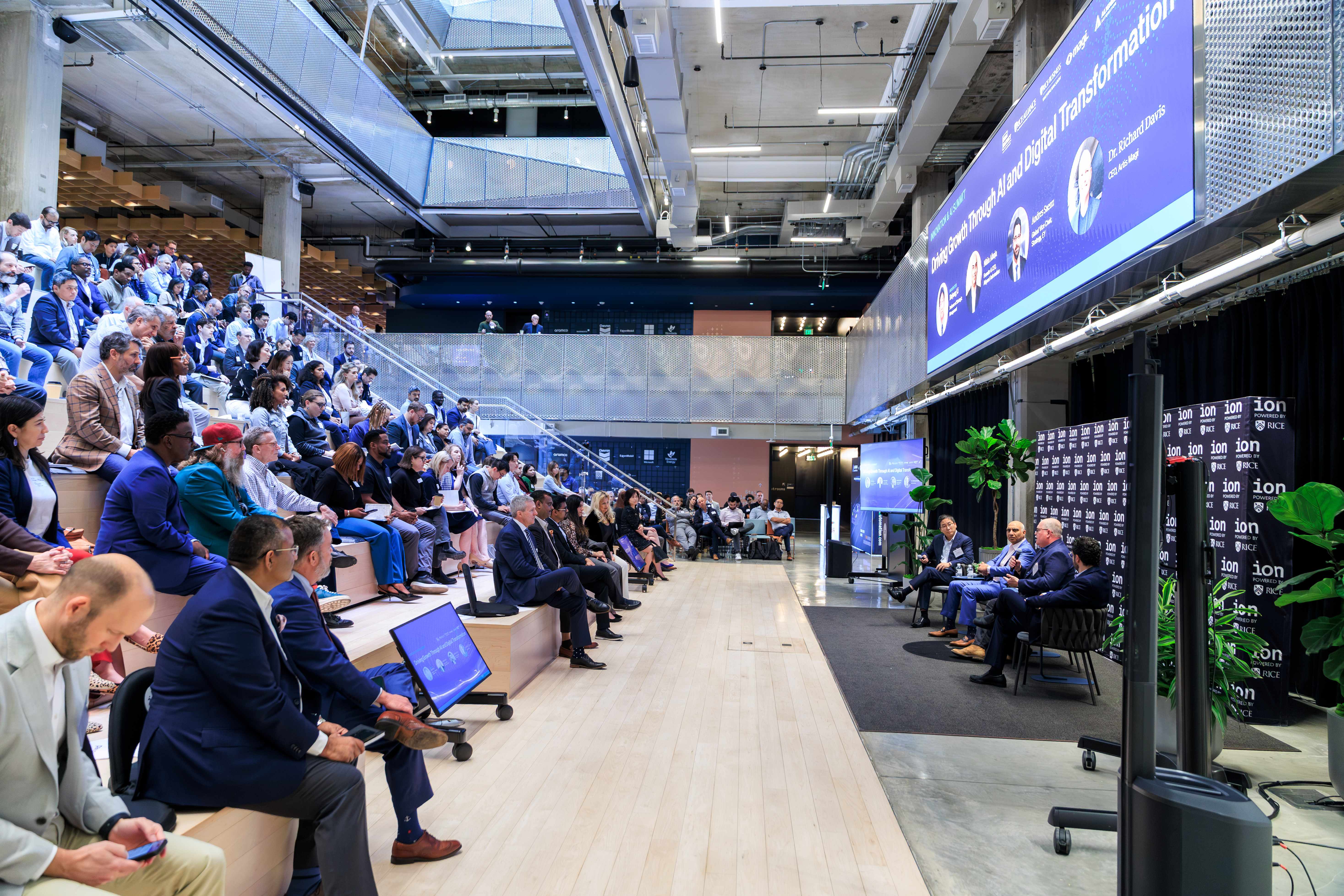
Rice Business Executive Education hosted its second annual Innovation and AI Summit this quarter, bringing together more than 400 industry leaders for a morning of discussions on AI in finance, digital transformation, and the future of human capital. Co-sponsored by Rice Business Executive Education, Ion, Rice Alliance, MAGI, Aligned Automation, and CenterPoint Energy, the summit provided a platform for senior executives to connect and examine the factors shaping competitiveness in an AI-driven landscape.
Key themes included driving meaningful AI adoption, fostering a culture that embraces change, and establishing governance frameworks across finance and strategy to ensure investments deliver measurable ROI. As Nitin Ahuja, CEO of Aligned Automation, emphasized during the summit, artificial intelligence may be powerful, but human leadership remains essential to successfully guide and realize its impact.
____________________________________________________________________________
The summit opened with a clear view of the current AI landscape facing Fortune 500 companies. Anup Sharma, CGO of Magi, pointed to 2022 as a pivotal inflection point with the release of ChatGPT, accelerating adoption at an unprecedented pace. Today, more than 1.5 billion users globally rely on generative AI, and 86% of enterprises have embedded AI into at least one business function.
This shift is even more pronounced within the workforce, where Gen Z is using AI across a majority of daily tasks, forcing organizations to evolve in order to attract and retain talent. AI is no longer experimental. It is becoming foundational to competitiveness and long-term economic positioning. For many organizations, it will determine near-term viability. Leaders from Hewlett Packard, Dell Technologies, and Houston Methodist reinforced this reality, emphasizing that organizations not operationalizing AI today are already falling behind.

Across discussions spanning technology, talent, and strategy, one message was consistent. AI is no longer about incremental improvement. It is reshaping how organizations operate. Historically, process optimization delivered marginal gains. Today, the scale of impact is fundamentally different.
“You used to get 10 to 15 percent productivity and be happy about it. Now you can get 50, 60, 70 percent improvement. It changes the conversation. It becomes, why do I even have this process in the first place?” Alex Barretto, SVP, Dell Technologies
This shift is forcing organizations to move beyond optimization toward redesign. Functions are being streamlined, layers of work are being removed, and roles are evolving. AI is no longer simply improving how work gets done. It is redefining what work needs to be done and how quickly organizations must adapt to remain competitive.
A clear theme emerging from both finance and technology perspectives is the move away from broad experimentation toward precision and control. Leaders emphasized that not all AI models are created equal, and selecting the right approach depends on the context and level of risk involved.
“If I’ve got a ball peen hammer and a 25-pound sledgehammer, I want to take the right tool out for the job. Our clients demand forensic grade accuracy. Being 80 or even 90 percent accurate is not good enough.” Ret. Admiral Doug Fears, COO, Magi
In high-stakes environments, particularly in finance and operations, accuracy thresholds are significantly higher. This is accelerating the adoption of more deterministic approaches, including small language models and agentic systems, which offer greater control, explainability, and reliability.
The implication is clear. AI strategy is no longer about adopting the most advanced model. It is about deploying the most appropriate one based on the decision context and required level of certainty.
Across all panels, there was strong alignment on one point. AI does not replace human decision-making. It enhances it. The most effective implementations combine automation with human oversight. Agentic systems handle repetitive analysis, pattern recognition, and data processing at scale, while humans remain responsible for interpretation, judgment, and action. This is where real value is created, not in the automation itself, but in how it informs better decisions.
As Nitin Ahuja reinforced, “Artificial intelligence is artificial. It is all being driven by human beings.” This distinction is critical. AI can surface insights and accelerate workflows, but it does not understand context, risk, or consequence. Without human involvement, organizations risk making faster decisions, not better ones.
Designing with a human in the loop is a deliberate choice. It ensures accountability, maintains control over outcomes, and builds the trust required for adoption at scale. It also enables organizations to continuously refine decisions as conditions change, rather than relying on static or one-time outputs.
Organizations that get this balance right will move faster without sacrificing control. Those that do not risk either inefficiency or over-automation, limiting the true potential of AI.
A core theme during the CIO / CHRO panel in addition to the others, was that technology alone does not drive success. Execution does.
AI systems are only as effective as the data they are built on and the context they can interpret. Leaders emphasized the importance of incorporating culturally and linguistically nuanced data to reduce bias and improve outcomes, particularly in global organizations.
At the same time, organizations must invest in culture and governance. The ability to scale AI is directly tied to how well companies enable adoption, establish accountability, and ensure responsible deployment.
The organizations that will differentiate are those that treat AI as a transformation, not a tool. Those that do will embed AI into core business operations and continuously evolve their decision-making models. Those that do not will struggle to move beyond isolated use cases and risk falling further behind as the pace of change accelerates.
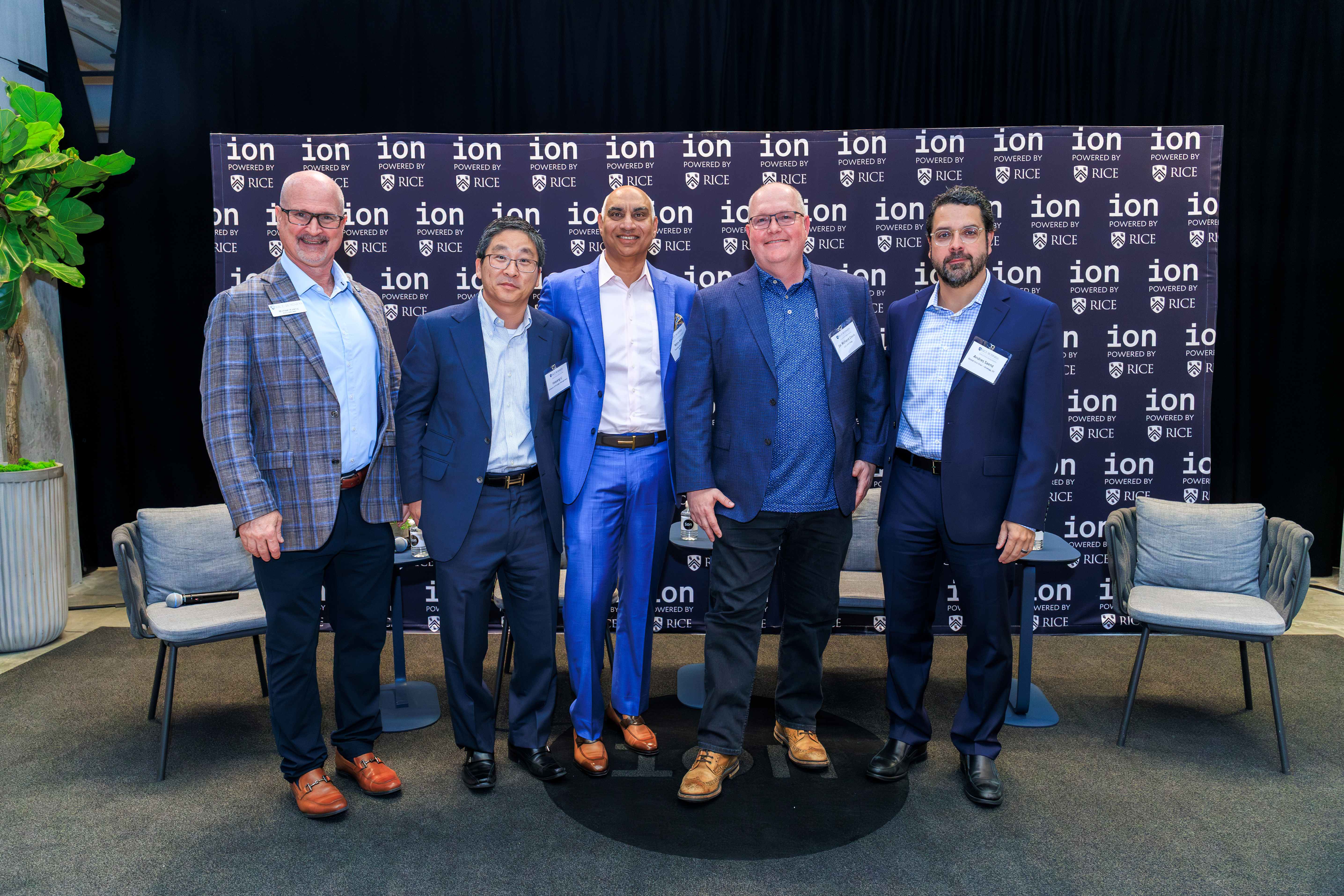
A consistent theme across the summit was the recognition that AI is no longer a future consideration. It is already embedded in how organizations operate today and is actively shaping competitiveness across industries.
“Artificial intelligence is not about the future, it’s the present.”
The conversation has shifted from adoption to execution. The organizations that will lead are those that build strong foundations across data, governance, and culture, and translate AI into measurable business value. The gap is already beginning to widen. Those that move with intent and discipline will define the next phase of competitive advantage. Those that do not will find it increasingly difficult to catch up.
____________________________________________________________________________